Apologies for my absence of late, but I was in my native Ukraine conducting a lecture tour regarding archaeoastronomy for undergraduates – it is a fascinating field of study, and the more interest we can arouse in the subject, the greater our understanding shall grow.
Something that struck me, however, was the interest in aligning ancient achievements with the interference of extraterrestrials. Had Erich von Däniken not written his fanciful Chariots of the Gods, I wonder if so many people would express an interest in denigrating our ancestors?
It is not hard to look for life beyond our world, nor is it hard to imagine that it does indeed exist – myself, I believe that the universe is large enough and magnificent enough to hide lifeforms in a multitude of places, and that it is reasonably probable that we are not alone among the ‘intelligent’ and ‘advanced’ species of the universe. What is difficult to imagine, however, is the reason why we must seek to assign a higher intelligence to achievements of our own people?
Like the myths of Atlantis, it seems that mankind is perpetually in pursuit of some lost wisdom, granted to us in ancient days by those from beyond our own star. This pursuit is equalled only by the same beliefs that the cataclysm of the end-times is upon us. Following these twin beliefs – perched between a wondrous, forgotten past, and a terrifying oblivion – one must wonder if this is the state of all life in the universe.
Tuesday, 28 June 2011

Wednesday, 20 April 2011
Beyond the Orbit of Saturn
Sir William Herschel – one of the truly great astronomers – is little heard-of these days, but tales of his achievements were among the inspirations that led me upon my own path into archaeoastronomy. Much like the Glass Bead Game players in Hesse’s brilliant novel, Herschel approached the sciences and the arts through a combined interest – originally interested in music, its mathematical processions and order led him to study that subject, followed by optics and lenses in particular. This, naturally, led to his interest in astronomy, for which he is best known.
Although his most famous discovery is that of Uranus, this remarkable man also discovered binary and multiple star systems, using a ‘simple’ (by modern standards) optical telescope. His continual and precise observations enabled him to catalogue no fewer than eight hundred such arrangements, which has provided us with much of the background in our current understanding of multiple star systems.
More fascinating than his discoveries, however, is the origin of his interests mentioned in the opening paragraph. A man who can see beyond the raw details and the niches of his line of study can see more of the beauty inherent in the universe than those around him. For a man whose interest in the stars stems from a love of music, the harmonies must be remarkable.
Although his most famous discovery is that of Uranus, this remarkable man also discovered binary and multiple star systems, using a ‘simple’ (by modern standards) optical telescope. His continual and precise observations enabled him to catalogue no fewer than eight hundred such arrangements, which has provided us with much of the background in our current understanding of multiple star systems.
More fascinating than his discoveries, however, is the origin of his interests mentioned in the opening paragraph. A man who can see beyond the raw details and the niches of his line of study can see more of the beauty inherent in the universe than those around him. For a man whose interest in the stars stems from a love of music, the harmonies must be remarkable.
Wednesday, 6 April 2011
The Death of a Star
In further news from NASA, their scientists believe they have discovered extremely strong evidence for the existence of supermassive black holes – by observing a star being torn apart. Although the light that allows us to observe this is now four billion years old, the event was one trillion times brighter than our own sun.
Black holes exert extraordinary gravity, as is relatively common knowledge, but – like all sources of gravity – it grows weaker with distance. A star passing close to a black hole finds itself falling gradually within the black hole’s sphere of influence. Being potentially millions of kilometers across, however, the star’s own gravity is capable of maintaining itself for a time. Rather than being instantly destroyed, it instead warps and stretches, being pulled out of shape towards the black hole.
As the star observed by NASA moved slowly closer to the black hole, the force pulling at it grew stronger, until the black hole’s gravity exceeded the star’s ability to hold itself together. At this moment, the star’s mass was torn from it, being wrenched into the black hole and quite literally torn apart.
The light we observe is caused by the enormous energies exciting the star’s atoms, throwing off vast quantities of light throughout the visible and invisible spectra – truly, this must be one of the most dazzling displays the universe has to offer us.
Black holes exert extraordinary gravity, as is relatively common knowledge, but – like all sources of gravity – it grows weaker with distance. A star passing close to a black hole finds itself falling gradually within the black hole’s sphere of influence. Being potentially millions of kilometers across, however, the star’s own gravity is capable of maintaining itself for a time. Rather than being instantly destroyed, it instead warps and stretches, being pulled out of shape towards the black hole.
As the star observed by NASA moved slowly closer to the black hole, the force pulling at it grew stronger, until the black hole’s gravity exceeded the star’s ability to hold itself together. At this moment, the star’s mass was torn from it, being wrenched into the black hole and quite literally torn apart.
The light we observe is caused by the enormous energies exciting the star’s atoms, throwing off vast quantities of light throughout the visible and invisible spectra – truly, this must be one of the most dazzling displays the universe has to offer us.
Wednesday, 30 March 2011
The Light of a Billion Suns
Merely a brief post this week to let you all know about the recent discovery of a super-luminous supernova. The description supplied in the article elegantly describes the magnificence of these astronomical marvels:
“At its peak luminosity, it was over 100 billion times brighter than the Sun. It emitted enough energy in one second to satisfy the power needs of the United States for one million times longer than the universe has existed.”
If ever we need to be reminded of the awe with which our ancestors looked upon the stars at moments of such change, we need only look at those stars we now see through the lens of our technology. Our means of watching have changed, as has our understanding, but simple human wonder remains constant.
“At its peak luminosity, it was over 100 billion times brighter than the Sun. It emitted enough energy in one second to satisfy the power needs of the United States for one million times longer than the universe has existed.”
If ever we need to be reminded of the awe with which our ancestors looked upon the stars at moments of such change, we need only look at those stars we now see through the lens of our technology. Our means of watching have changed, as has our understanding, but simple human wonder remains constant.
Wednesday, 23 March 2011
The Music of the Spheres
It is popularly known, predominantly courtesy of Holst’s The Planets, that people throughout the course of human civilisation have assigned musical patterns and harmonies to the movements of the stars and planets. This “musica universalis” sees early use in Hebrew mythology, which explains the cosmos as having movements and harmonies that are designed to sing the praises of the creator-deity. In that mysticism, there is an intriguing emphasis upon the interrelatedness of many aspects of the universe, including language, mathematics, music, astrology and the demiurge.
This search for such relationships is not, of course, unique to the Jewish people, as can be easily determined from my earlier blogs – constellations and the ‘study’ of astrology are, if anything, elegant proof of this desire. Of particular interest, however, is the fact that there is actually some validity in this particular belief.
Johannes Kepler, who gave us the laws of planetary motion, was a firm believer in a divinely-designed resonance between the planets, and used his observations and calculations to seek it out. Kepler’s great gift to astronomy was the realisation that planets orbit elliptically, rather than circularly, creating what are called the perihelion (greatest distance from the orbital centre) and the aphelion (shortest distance from the orbital centre). The variation in distance also, however, results in changes in a planet’s angular velocity, as it speeds up while closer to the orbital centre.
In his Harmonices Mundi (The Harmony of the World), he observed that the ratio between a planet’s least and greatest angular velocity relates to a musical harmony. Kepler found that maximum and minimum velocities of Saturn formed an almost perfect ratio of 4:5 (a major third in music). The motions of Jupiter differ by a 5:6 ratio (a minor third). Mars differs 2:3 (a “diapente”); Earth differs 15:16 (a semitone); and Venus differs 24:25 (a “diesis”, which is, intriguingly, the smallest difference considered generally audible to the human ear).
Kepler also discovered that nearly all of the ratios of the maximum and minimum angular velocities of neighbouring planets produce musical harmonies. The orbits of Mars and Jupiter represent the single exception, being a less flattering (or disharmonic) 18:19 ratio – in his defence, however, this dissonance could be explained by the presence of the main asteroid belt, which was not discovered for a further 150 years. Had a visible planet orbited there, it is feasible to believe that this pattern of harmonies could well have continued.
This search for such relationships is not, of course, unique to the Jewish people, as can be easily determined from my earlier blogs – constellations and the ‘study’ of astrology are, if anything, elegant proof of this desire. Of particular interest, however, is the fact that there is actually some validity in this particular belief.
Johannes Kepler, who gave us the laws of planetary motion, was a firm believer in a divinely-designed resonance between the planets, and used his observations and calculations to seek it out. Kepler’s great gift to astronomy was the realisation that planets orbit elliptically, rather than circularly, creating what are called the perihelion (greatest distance from the orbital centre) and the aphelion (shortest distance from the orbital centre). The variation in distance also, however, results in changes in a planet’s angular velocity, as it speeds up while closer to the orbital centre.
In his Harmonices Mundi (The Harmony of the World), he observed that the ratio between a planet’s least and greatest angular velocity relates to a musical harmony. Kepler found that maximum and minimum velocities of Saturn formed an almost perfect ratio of 4:5 (a major third in music). The motions of Jupiter differ by a 5:6 ratio (a minor third). Mars differs 2:3 (a “diapente”); Earth differs 15:16 (a semitone); and Venus differs 24:25 (a “diesis”, which is, intriguingly, the smallest difference considered generally audible to the human ear).
Kepler also discovered that nearly all of the ratios of the maximum and minimum angular velocities of neighbouring planets produce musical harmonies. The orbits of Mars and Jupiter represent the single exception, being a less flattering (or disharmonic) 18:19 ratio – in his defence, however, this dissonance could be explained by the presence of the main asteroid belt, which was not discovered for a further 150 years. Had a visible planet orbited there, it is feasible to believe that this pattern of harmonies could well have continued.
Wednesday, 16 March 2011
Lines in the Sand
Much is written of the Nazca and their miraculous, monumental art etched into the arid plains of their Peruvian lands – and, alas, much of it is pseudo-scientific at best, and outright fallacious at worst. These writings range from the feasible attachment of those icons to the constellations (although the sheer mass of lines and figures makes such associations inevitable, rather than necessarily accurate), through to the ludicrously overblown claims that they could not possibly have been made without the assistance of extraterrestrials. Like the crop circles revealed to be hoaxes, rumours of miraculous coincidences and grand feats overwhelm the verifiable facts.
Rather than introduce something miraculous to the works of early civilisations, these theories do little but denigrate our ancient ancestors. As I have discussed on many occasions – and the general purpose of this blog is to continue to do so – I must assert the ingenuity of those who came before us. It is a simple matter, in days when gadgets we can fit into our pockets do much of our work for us, to assume that because we do not need to consider how to achieve such feats that it must have been impossible for people thousands of years earlier. In fact, it is worse than simple: it is an arrogance of modern society.
It is comparable, if you will, to imagine someone a thousand years from now looking upon the Eiffel Tower and, assuming records have been lost, believing that it simply could not have been achieved through the technology available at that time. It was, of course, possible, but required Gustave Eiffel to invent new means of construction; new varieties of crane to hoist the vast pillars of metal into place; it was possible, but accompanied by one of the very greatest of our achievements – which is to say, our incomparable desire to innovate.
The fact of the matter is, of course, that archaeologists have been able to replicate the Nazca designs using tools available to the culture of the era, with few people involved, and in relatively short order. That being said, of course, these symbols are magnificent works – truly remarkable feats of ingenuity and a manifestation of man’s desire to see their imagination and their works wrought large across the flesh of the world, as if in ink.
Rather than introduce something miraculous to the works of early civilisations, these theories do little but denigrate our ancient ancestors. As I have discussed on many occasions – and the general purpose of this blog is to continue to do so – I must assert the ingenuity of those who came before us. It is a simple matter, in days when gadgets we can fit into our pockets do much of our work for us, to assume that because we do not need to consider how to achieve such feats that it must have been impossible for people thousands of years earlier. In fact, it is worse than simple: it is an arrogance of modern society.
It is comparable, if you will, to imagine someone a thousand years from now looking upon the Eiffel Tower and, assuming records have been lost, believing that it simply could not have been achieved through the technology available at that time. It was, of course, possible, but required Gustave Eiffel to invent new means of construction; new varieties of crane to hoist the vast pillars of metal into place; it was possible, but accompanied by one of the very greatest of our achievements – which is to say, our incomparable desire to innovate.
The fact of the matter is, of course, that archaeologists have been able to replicate the Nazca designs using tools available to the culture of the era, with few people involved, and in relatively short order. That being said, of course, these symbols are magnificent works – truly remarkable feats of ingenuity and a manifestation of man’s desire to see their imagination and their works wrought large across the flesh of the world, as if in ink.
Wednesday, 9 March 2011
Clouds that Give Birth to Stars
Nebulae are relatively widely-known as astronomical figures, but this was not always the case – rather, the term was indistinct, referring to a wide range of celestial objects. In fact, even into the early twentieth century, the term referred to those distant objects that we now know are whole galaxies.
Despite this early confusion, nebulae were always notable as objects to those cultures that paid close attention to the night sky. The earliest records of them as such come from the Maya and the Greeks, who noted that some areas of the sky appeared to glow with a diffuse light, as if many tiny stars were clustered in a small region. It was, however, many centuries before their true nature could be correctly defined.
There are three broad types of nebula, according to their ‘emissions’, which is to say, how they behave in accordance with light. Absorption (or ‘dark’) nebulae are clouds without stars within or nearby, and thus are characterised by their dampening effect on the light from stars beyond. Reflection nebulae have nearby stars whose light illuminates the gases of the nebula. The final, and more interesting kind, are called emission nebulae, and are the birthplaces of stars and planets.
Emission nebulae are regions of space in which matter comes together, forming dense pockets that, following all of the usual laws of gravity, gather other matter into themselves. As these gain further mass, their relative gravity continues to increase, faster and faster with the increase of mass and, thus, gravity. In the fullness of time, these pockets gain so much mass that the gravity holding it in place, condensing matter into such a confined space, results in the ignition of the matter, thus giving birth to a star.
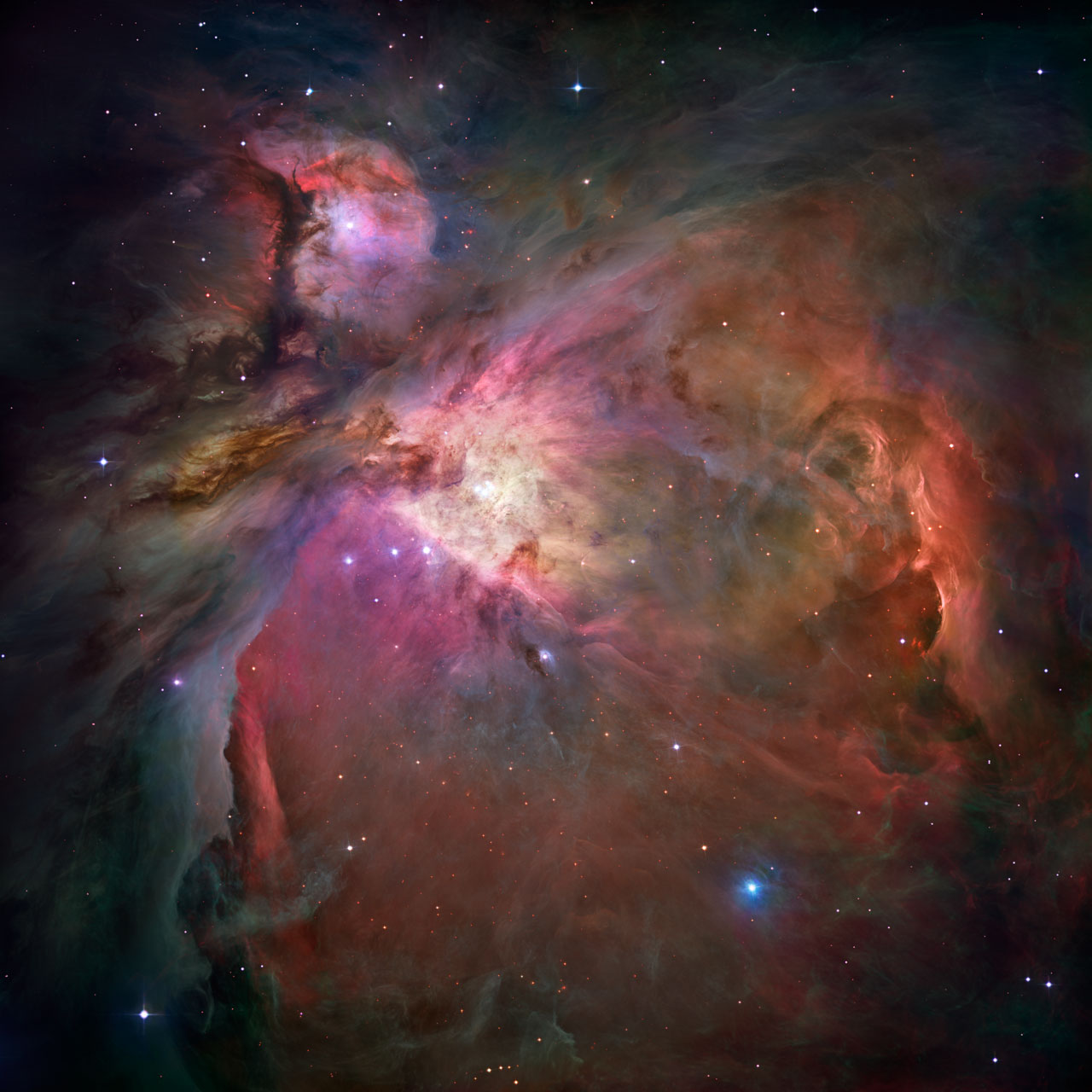
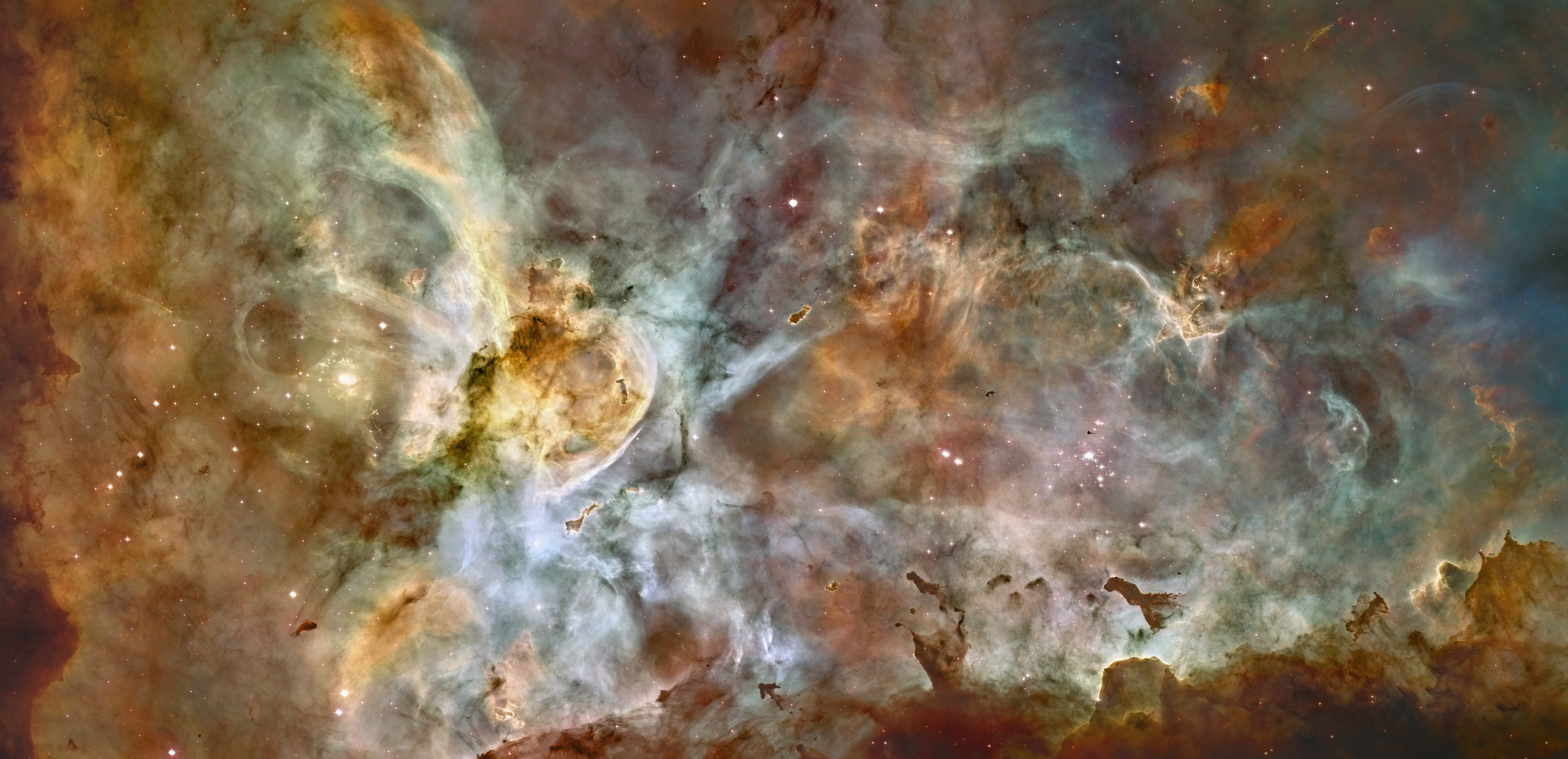
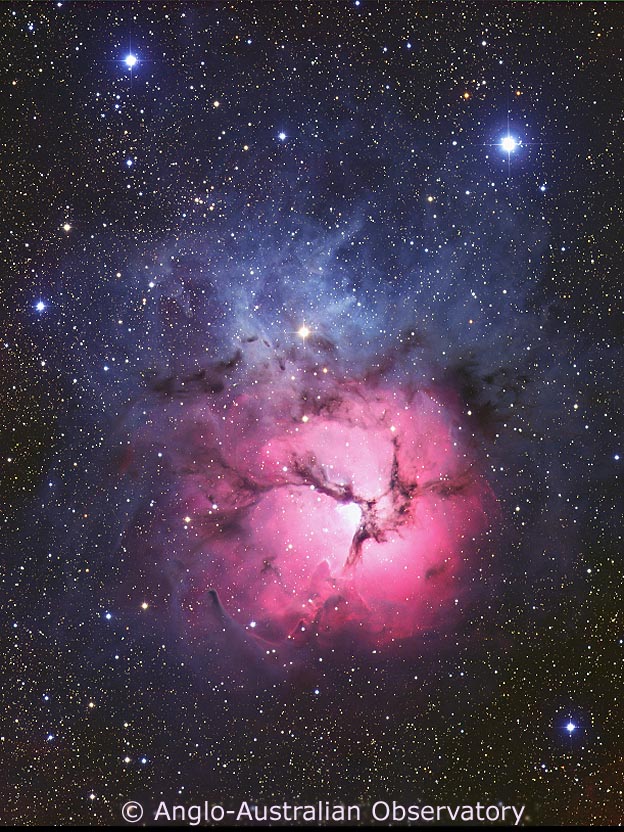
If this were not enough, emission nebulae are also among the most beautiful of all astronomical phenomena – the Orion Nebula and Carina Nebula are worthy of special mention, while the Trifid Nebula is composed of emission, reflection and absorption nebulae, creating its wondrous lobed structure.
Despite this early confusion, nebulae were always notable as objects to those cultures that paid close attention to the night sky. The earliest records of them as such come from the Maya and the Greeks, who noted that some areas of the sky appeared to glow with a diffuse light, as if many tiny stars were clustered in a small region. It was, however, many centuries before their true nature could be correctly defined.
There are three broad types of nebula, according to their ‘emissions’, which is to say, how they behave in accordance with light. Absorption (or ‘dark’) nebulae are clouds without stars within or nearby, and thus are characterised by their dampening effect on the light from stars beyond. Reflection nebulae have nearby stars whose light illuminates the gases of the nebula. The final, and more interesting kind, are called emission nebulae, and are the birthplaces of stars and planets.
Emission nebulae are regions of space in which matter comes together, forming dense pockets that, following all of the usual laws of gravity, gather other matter into themselves. As these gain further mass, their relative gravity continues to increase, faster and faster with the increase of mass and, thus, gravity. In the fullness of time, these pockets gain so much mass that the gravity holding it in place, condensing matter into such a confined space, results in the ignition of the matter, thus giving birth to a star.
If this were not enough, emission nebulae are also among the most beautiful of all astronomical phenomena – the Orion Nebula and Carina Nebula are worthy of special mention, while the Trifid Nebula is composed of emission, reflection and absorption nebulae, creating its wondrous lobed structure.
Subscribe to:
Posts (Atom)